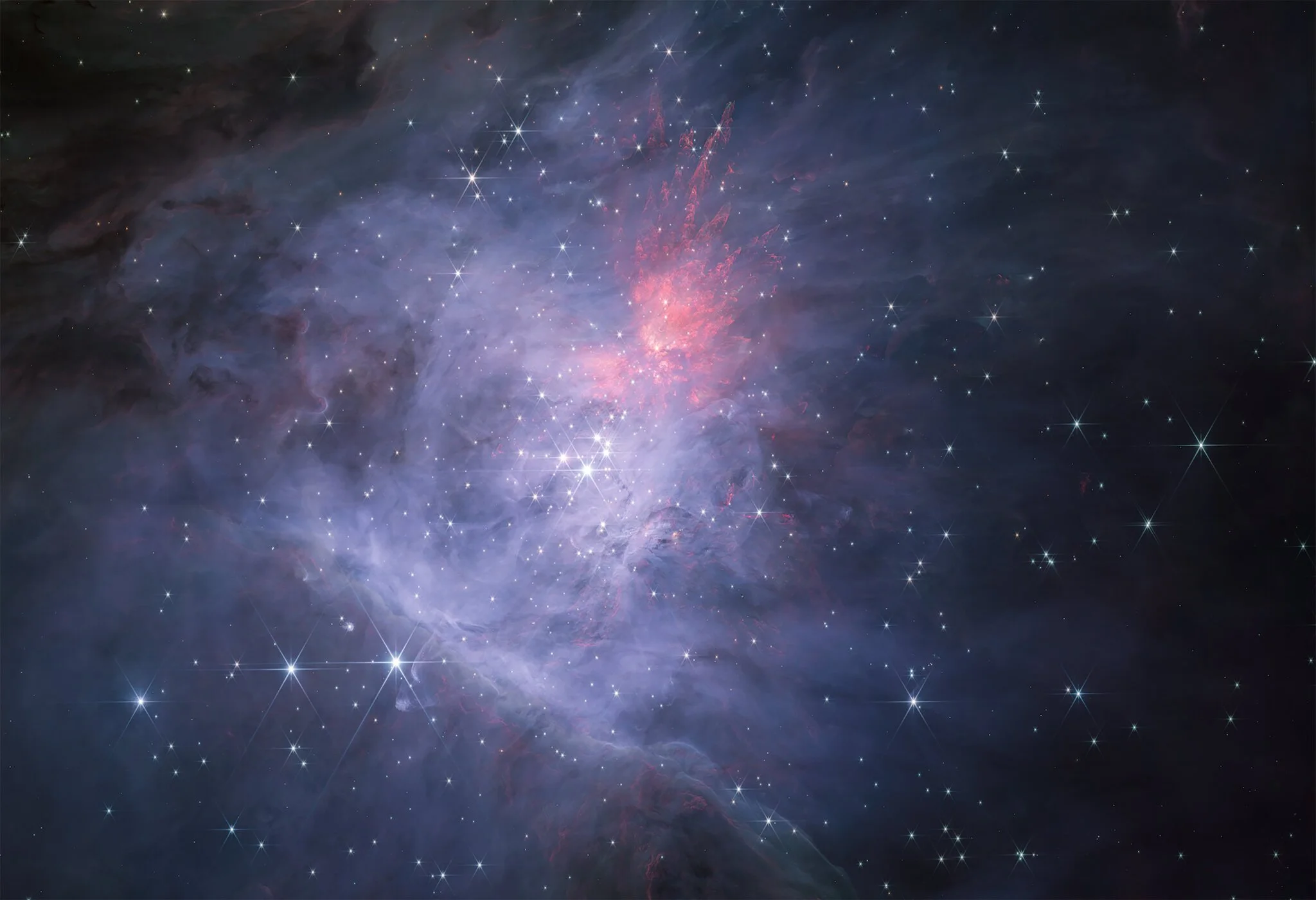
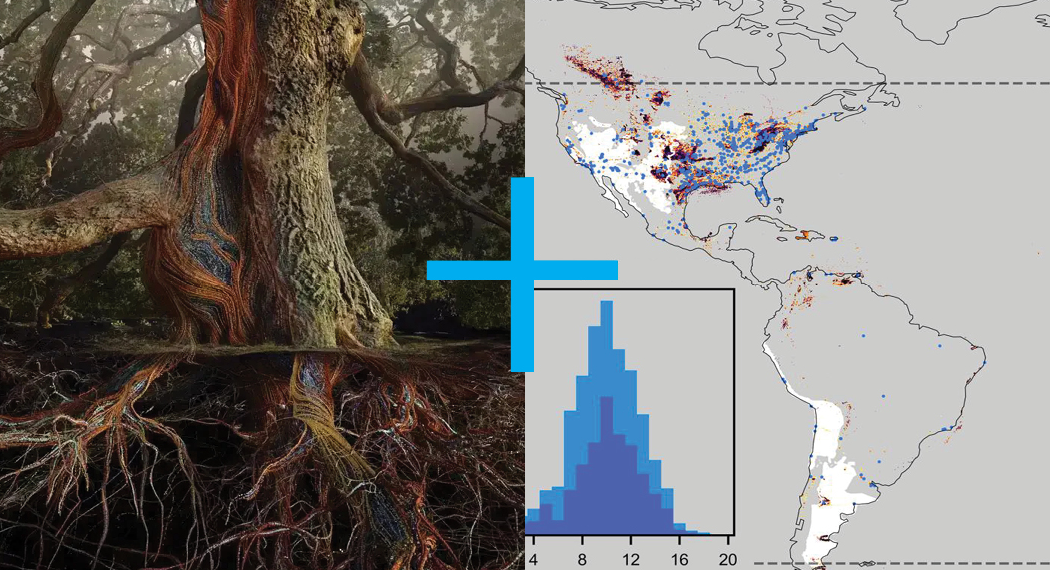
(L) Marshmallow Laser Feast: Of the Oak (R) Detail of NASA’s Earth Surface Mineral Dust Source Investigation (EMIT) mission coverage and total observations for simulated 1-year mission. Thorpe et al., Sci. Adv. 9, eadh2391 (2023)
Creating Space
Inaugural Roundtable:
Wednesday, March 11
9:00 - 10:30 AM Pacific
16:00 - 17:30 GMT
Virtual Session
Illuminating the Invisible
The inaugural session explores the unseen forces that shape space exploration—ecological systems, carbon cycles, cultural narratives, ethical responsibilities, and the invisible infrastructures that sustain both planetary health and public imagination.
The conversation will be grounded by two complementary perspectives:
Barnaby Steel is a co-founder of Marshmallow Laser Feast, an art collective whose immersive installations translate complex biological and environmental systems into sensory, emotionally resonant experiences. His work invites audiences to feel planetary interdependence, not just understand it intellectually.
Charles Miller is a Senior Research Scientist at the NASA Jet Propulsion Laboratory and a Visiting Associate at the California Institute of Technology, whose work advances our ability to measure and model Earth’s carbon systems from space—using infrared light to visualize greenhouse gas molecules in the atmosphere and understand the dynamics that shape climate, sustainability, and the future of planetary stewardship.
Together, their perspectives invite a deeper inquiry: How does visibility shape responsibility? What happens when technical measurement and human perception converge? And how might art and science together sustain both space exploration and public care for the planet?
Why Participate
The future of space exploration will not be shaped by technology alone. It will be shaped by the ideas we prioritize, the voices we include, and the questions we are willing to hold together across difference.
As space exploration becomes more complex and consequential, progress depends on our ability to bring different ways of knowing into conversation—scientific, artistic, technical, educational, philanthropic, and human.
The Creating Space Virtual Roundtable Series offers a structured space for exploring perspectives about the future and sustainability of space exploration.
What Makes This Series Different
Designed for dialogue: This is not a panel or debate. Conversations are facilitated to support listening, curiosity, and shared meaning-making.
Interdisciplinary by design: Each session pairs a humanities perspective with a technical sciences perspective, with participants spanning science, engineering, arts, humanities, philanthropy, and storytelling.
Humanity-centered exploration: Conversations integrate planetary health, ethics, public engagement, and long-term sustainability alongside discovery and innovation.
Outcomes beyond the room: Insights are synthesized and shared to extend learning and public engagement beyond the session.
Roundtable Format
Each virtual roundtable is a 90-minute facilitated session (hosted virtually and recorded) and includes:
10 minutes welcome and framing
Two 15-minute grounding presentations—one from the arts or humanities and one from the technical sciences
Brief Q&A following the presentations
45 minutes of facilitated dialogue focused on collective sense-making
The goal is collective sense-making—supporting thoughtful collaboration and communication across difference to explore the future of space exploration and the sustainability of space science.
Series-Wide Guiding Questions
Across the series, we return to several orienting questions:
What should the future of space exploration look like?
How do we keep the health of Earth at the center as we explore beyond it?
How do we bring the best of humanity with us—and move beyond zero-sum thinking?
How do we sustain space exploration sciences, and how can this community contribute to that sustainability?
Who Participates
Space and Earth scientists, technologists, and engineers
Space leaders and ecosystem builders
Philanthropists and foundation partners
Artists, storytellers, and journalists
Academics studying space from societal, historical, or economic perspectives
Participants engage as peers. All forms of contribution—insight, inquiry, reflection, and lived experience—are valued.
What Participation Makes Possible
By participating in a Creating Space roundtable, you help shape shared understanding across the space ecosystem. Participation offers:
Engagement across difference with people whose perspectives and expertise may differ from your own
Expanded ways of thinking through exposure to humanistic and technical perspectives side by side
Meaningful cross-disciplinary connection that can spark future collaboration
A chance to influence the broader conversation about how we sustain and support space exploration
What Happens After the Conversation
Participation does not end when the roundtable concludes. Participants can expect:
Clarity and perspective—new frames, questions, and language to carry into their work
Connection that lasts—opportunities to stay connected with fellow participants
Reflection and synthesis—a concise summary of themes and insights shared more broadly to support public engagement
The aim is not to extract expertise, but to create shared learning that participants carry forward into their own communities and institutions.
RSVP by March 2nd
Event Date: March 11, 2026
• 9:00 - 10:30 AM PST
• 17:00 - 18:30 GMT

Creating Space builds the connective tissue of the space ecosystem—radiating possibility where science, art, and humanity meet.